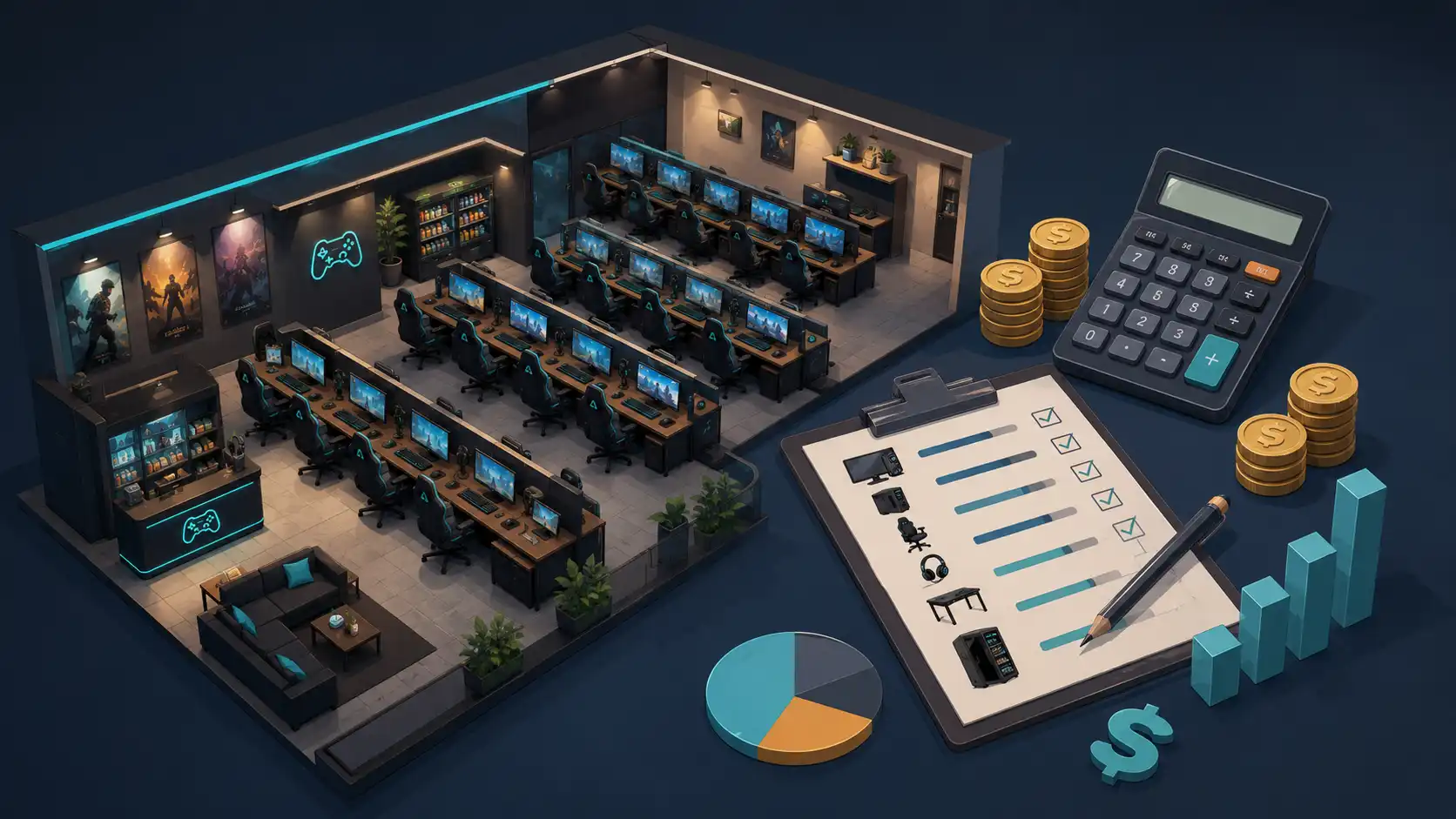
Why a game center costs more than a cyber cafe
A game center is a cyber cafe with the hardware turned up. The floor plan and the paperwork look similar. The bill for each seat does not. A browsing station can run on a modest computer. A competitive gaming seat needs a fast processor, a dedicated graphics card, a high-refresh monitor, and peripherals that survive heavy daily use. That single difference drives most of the gap in startup cost. It also carries into the running costs, since stronger machines draw more power and wear their parts faster.
Where the money goes
- Gaming PCs with a capable processor and a dedicated graphics card for each seat.
- High-refresh monitors sized for the seat and the games on offer.
- Durable keyboards, mice, headsets, and mousepads that take constant use.
- Gaming chairs and desks built for long sessions rather than quick visits.
- A strong server or host PC, a fast switch, and cabling that can carry game updates.
- Esports and cafe management software for billing, client control, and player accounts.
- A fast business internet line with enough capacity for many machines at once.
- Power, cooling, and a console corner if the venue plans to offer one.
Graphics cards set the pace
In most game center budgets the graphics cards are the single largest and most volatile line. Their prices swing with demand. A shortage can add a real premium overnight. They also age faster than the rest of the machine, since new titles keep raising the bar. A sensible plan treats the graphics cards as a part that will be upgraded at least once during the life of the venue, not a one-time purchase. Monitors, peripherals, and chairs are steadier costs. They still add up quickly across twenty or forty seats. Cheap peripherals that fail early can cost more over a year than good ones bought once.
The running costs behind the hardware
Opening a game center is only the first bill. Keeping it open is the larger one over time. Electricity is the standout, because gaming PCs under load and the cooling to match them draw far more than browsing machines. Game and platform accounts, tournament prizes, and content licenses add monthly cost that a plain cafe never sees. Staff wages, rent, and the internet line sit on top of all of it. Management software is usually a subscription for cloud platforms. That renewal belongs in the monthly plan rather than the opening budget.
Budget traps specific to gaming venues
- Treating graphics cards as a one-time cost instead of a recurring upgrade.
- Undersizing the electrical supply and cooling for a full floor under load.
- Relying on a single income stream when tournaments and slow days are uneven.
- Buying show-piece chairs and lighting before the network and spares are sound.
- Ignoring the upgrade cycle, then falling behind the titles customers want to play.
Questions before opening a game center
- Does the budget include at least one graphics-card upgrade during the venue's life?
- Can the building's power and cooling handle every seat running at once?
- Is the internet line fast enough to update many large games without stalling play?
- What does the chosen management platform cost each month, renewals included?
- Beyond hourly play, what second revenue stream will steady the slow days?
Frequently asked questions
Is it more expensive to open a game center than a cyber cafe?
In most cases yes, because each gaming seat needs a fast processor, a dedicated graphics card, a high-refresh monitor, and heavier peripherals. The paperwork and floor plan look similar to a cyber cafe. The hardware bill per seat is what drives the gap.
What is the most expensive part of a game center?
The graphics cards are usually the single largest and most volatile line. Their prices swing with demand. They also age faster than the rest of the machine as new titles arrive. Plan for at least one upgrade during the life of the venue.
How much does electricity cost for a game center?
Electricity is one of the heaviest running costs, since gaming PCs under load and the cooling to match them draw far more than browsing machines. The exact bill depends on local rates, the seat count, and the hours the floor runs. Confirm the building can supply and cool a full floor before signing a lease.
Can I open a small game center on a low budget?
A small gaming venue is possible, though the per-seat hardware still costs more than a browsing seat. Starting with fewer, well-specified machines is usually safer than filling a large floor with weak ones. Keep a buffer for the first upgrade cycle and for slow opening weeks.